


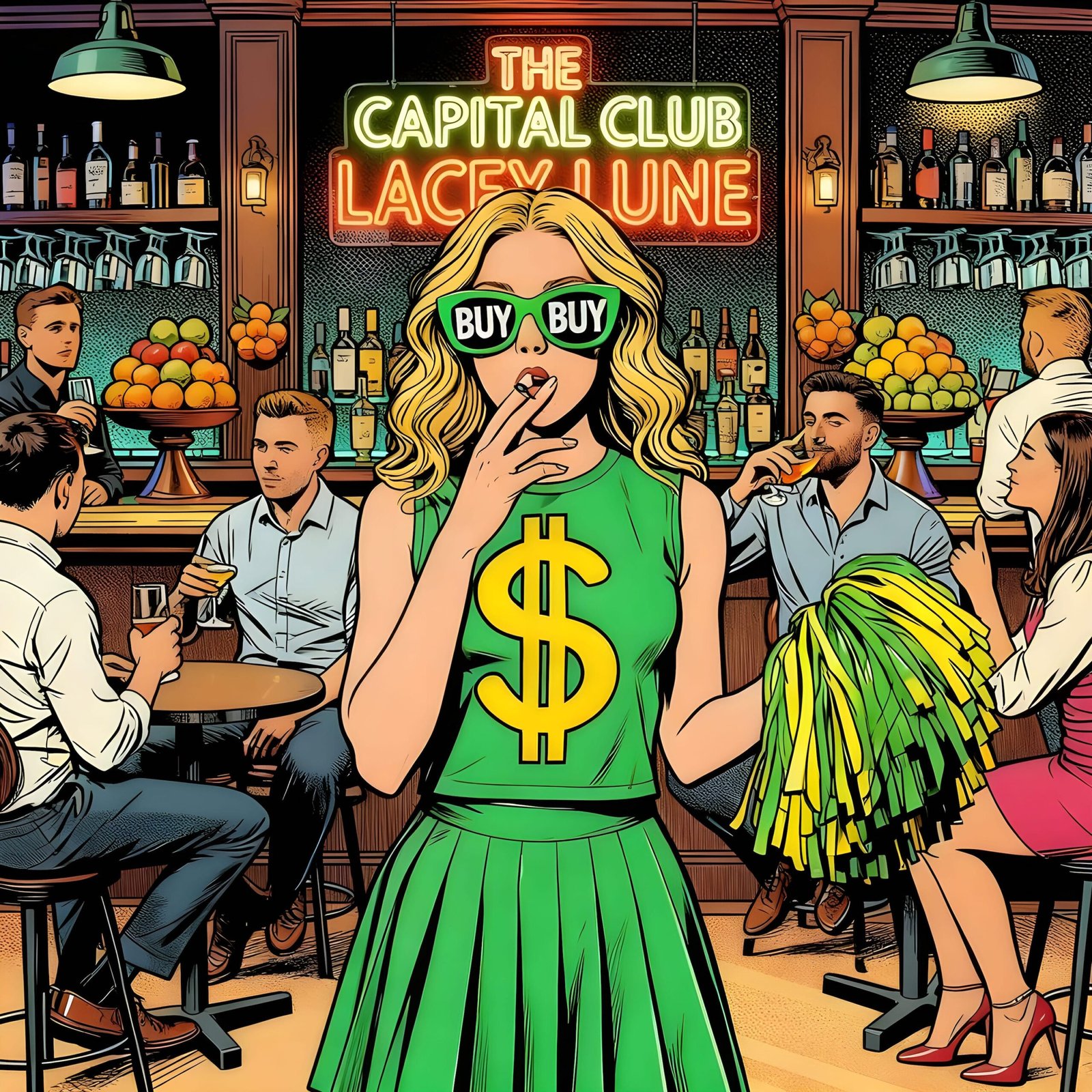
Lacey Lune takes aim at a culture where personal struggles can become products and self-expression comes with a price tag on The Capital Club, a concept album that examines the uneasy relationship between identity, ambition and capitalism. Moving across art pop, noir electronics, bruised balladry and spoken word satire, the project questions what happens when branding, empowerment, therapy and self-care become part of the business of selling yourself.
Across its 17 tracks, The Capital Club follows a world where grief becomes content, the body becomes a storefront and private crises arrive with the possibility of sponsorship. Lune shifts between the roles of chanteuse, motivational speaker, commodity and unreliable narrator, often turning the language of personal growth and independence against itself. The result is a record that finds humour in uncomfortable places without ignoring the pain beneath its observations.
The album’s musical approach reflects that tension. Skewed electronic pop and glam abrasion sit alongside vulnerable ballads and bright, deliberately unstable hooks. Retro soul, electronic cabaret and alternative pop all have a place in Lune’s sound, but the changes in style serve a wider purpose. The music moves between confidence and uncertainty, using catchy melodies to draw listeners into ideas that become more unsettling the longer they sit with them.
One of the album’s most distinctive moments is “The Nurse with Wound List,” a surprisingly accessible love letter to radical listening and the experience of discovering music that changes how you hear the world. References to experimental artists including Faust, Cluster, AMM and Throbbing Gristle become unlikely romantic leads in a song that celebrates the lasting impact of challenging sounds.
“If I Go,” featuring Softcore Revelations, offers a quieter counterpoint. Built around a minor-key electronic arrangement, the song explores leaving and loving imperfectly, with Lune delivering an intimate performance that sets aside the album’s sharper satire. Elsewhere, “Pay You on Friday” disguises a class-conscious statement as an IOU, connecting financial insecurity with sexual labour, artistic exploitation and the commercial value placed on female visibility. “Remind Me, How Much Are We Talking About?” takes a more direct approach, using spoken word to question who profits when bodies, trauma and empowerment become marketable.
Featuring Nada UV and Anton Donovan among its additional contributors, The Capital Club brings these themes into a wider musical and cultural conversation. Its three-part sequence, “Nothing Feels Normal Anymore,” provides a recurring frame for a record concerned with the pressure to turn every private experience into something public and profitable.
Lacey Lune is the alter ego of Jessica Rae Lundstrom, a San Diego native whose background includes growing up in foster care within a Mormon environment. Her work moves between retro soul, glam pop, noir electronics and emotionally exposed songwriting, often pairing self-mocking glamour with volatile hooks and unexpected arrangements.
With The Capital Club, Lune builds an album around the contradictions at the centre of modern self-presentation. It is funny without avoiding pain, politically pointed without relying on slogans, and firmly rooted in pop while preserving its stranger instincts. Beneath its sharp observations is a central question: in a culture that asks people to sell so much of themselves, what remains beyond the transaction?
Listen below:open.spotify.com/track/4i8WuUX
Follow Lacey Lune: