


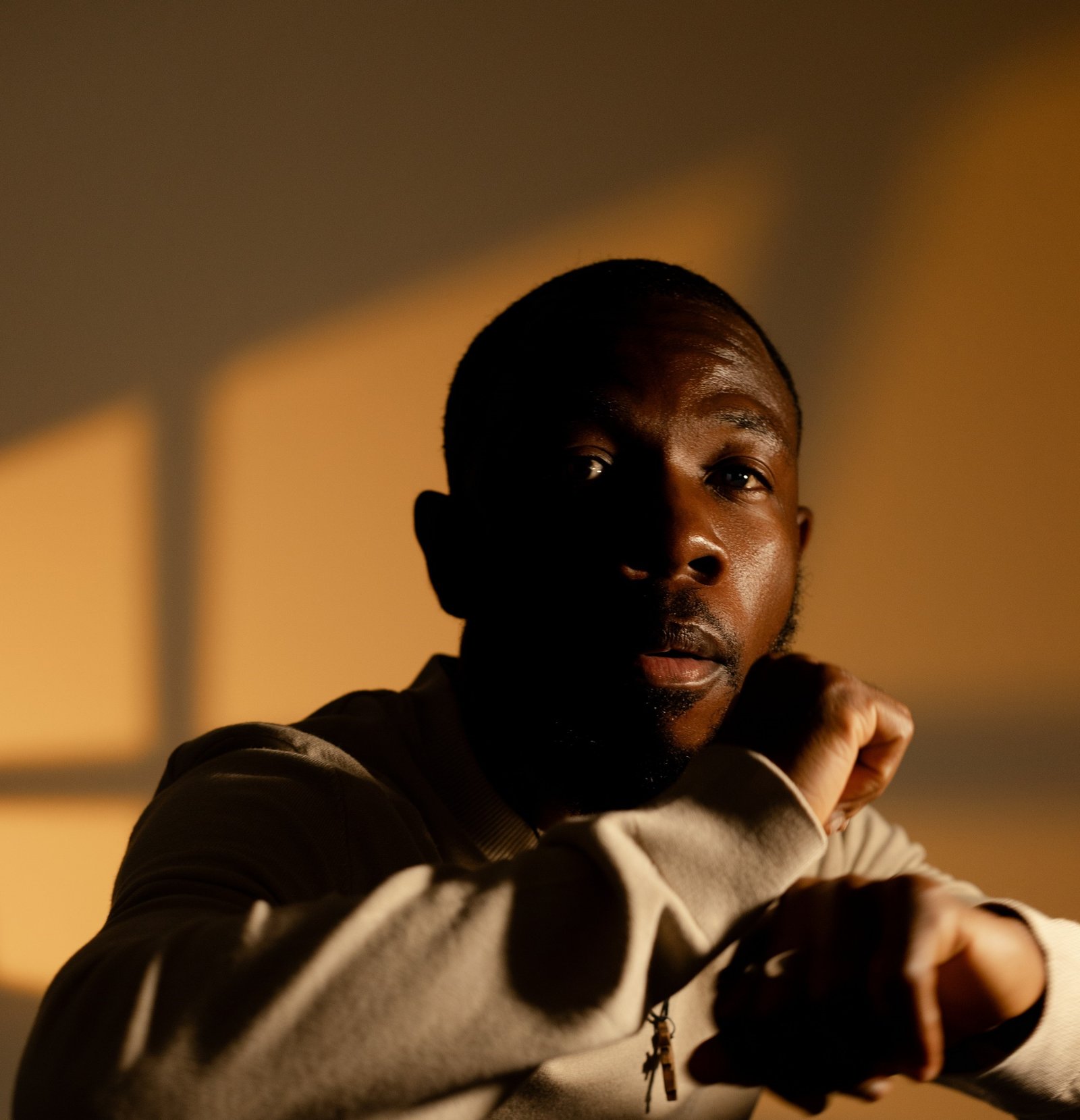
Ghanaian-born artist Kookusi releases “Phase V,” a two-track project featuring “IDK” and “Ten Toes.” This marks the conclusion of a five-year framework the artist has used to chart his life, one where scientific research and musical output have never been separate pursuits, but two expressions of the same inquiry into human behaviour.
Since relocating to the US to begin a PhD in Neuroscience and Pharmacology, Kookusi has organized his output into “Phases”. The full-year periods hold his academic milestones and musical releases together as a single continuous record. “Phase V” is the fifth and, by his account, possibly final entry in that structure, arriving as he completes his doctorate.
Kookusi’s public profile began before the framework did. Phase I covers his pharmacy school years in Ghana and the viral “Second-hand Dreams” freestyle, widely circulated as the “Uber driver freestyle,” which introduced his voice to listeners before his name had caught up.
Phase II opened with the start of his PhD at UNT Health and the release of his debut EP, “5foot3,” a project that established him as both a technically gifted lyricist and a cultural reference point for vulnerability in Ghanaian music. The same year brought the Thomas and Elena Yorio award for outstanding first-year PhD student, and a standout “Clean and Pure” submission that drew Ghana’s music industry toward him.
Phase III produced “Greetings from Abroad,” an EP shaped by Kookusi’s growing awareness of his own fear of failure while managing two demanding careers at once. Its centrepiece, “Greatest Fear” with Arathejay, resonated widely as an unusually direct piece of songwriting. He defended his PhD proposal, research into the non-brain effects of nicotine in addiction, in the same period.
Phase IV translated that research directly into music, releasing “Addicts Anonymous,” with Ghanaian lawyer and rapper RBD. The project broadened the conversation around addiction beyond substance use, challenging the stigma attached to it. Kookusi advanced to PhD candidacy that year and was awarded the American Heart Association’s pre-doctoral fellowship to support his nicotine research.
Building Toward “Phase V”
The transition into Phase V tested Kookusi more than any prior stretch, failed experiments, diminished social capital, and mounting pressure across both careers. A standout verse submitted to Worlasi’s VIMH challenge became one of his most widely heard moments, though Kookusi has described it as a private letter to himself more than a public statement.
Phase V opened with “This Ability,” a multidisciplinary project combining choral music, rap, poetry, journalism, and film to tell the story of Emmanuel Eckow Clock Amoako, a Ghanaian athlete born with a limb defect who became a prominent figure in the country’s basketball history. The project was accepted into the EU-funded CARE art-for-mental-health catalogue and is now used as teaching material in classrooms.
Even amid that recognition, Kookusi has spoken candidly about the uncertainty that shadowed the final year of his PhD, with no clear answers on publications, graduation, or what would follow. That period surfaces in his feature verse on Obeng King’s “Say a Prayer.”
Phase V officially brings that arc to a close. “IDK” addresses the uncertainty of this period directly, while “Ten Toes”, written at the end of Phase IV as a freestyle, finds its release here. Kookusi has cited Ecclesiastes 3:11 as a grounding influence throughout the project.
With his doctorate complete, KooKusi has not confirmed whether the phase framework will continue. What remains constant is his core throughline: an artist using music to work through the exact same questions about human nature that he pursues in the laboratory.
