


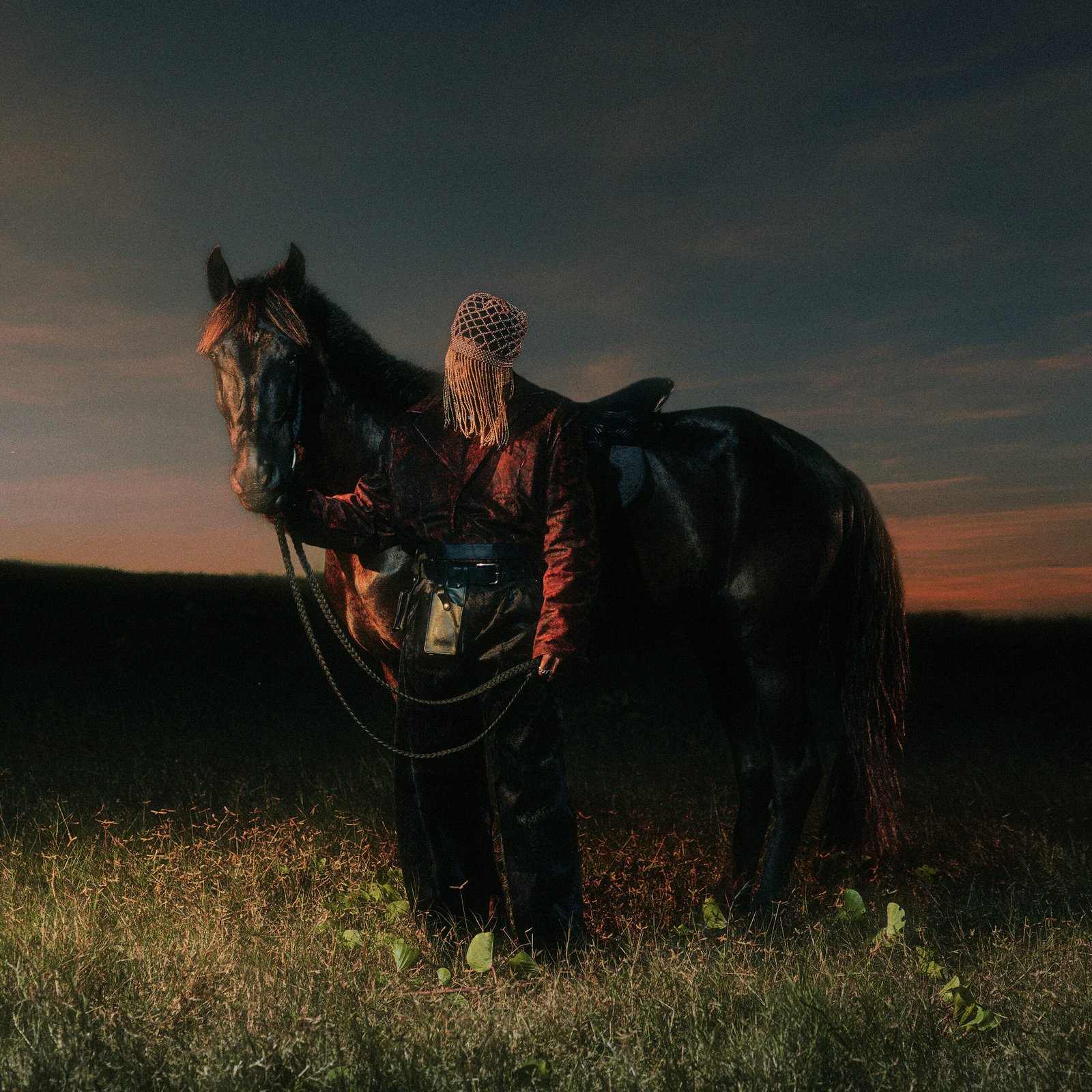
In the modern landscape of independent music, the term “independent” is often used as an apology for limited reach or scaled-back ambition. AratheJay’s campaign for “The Odyssey”, however, completely flips this script. The album release is a compelling demonstration of how a fiercely independent African artist can build something of genuine scale by combining creative clarity with the right partnerships. Looking back at the trajectory of this release, reflections on AratheJay’s “The Odyssey” indicate one of the most successful album rollout campaigns from an indie artist in recent memory.
The release campaign significantly combined community activations, international touring, high-profile media placement, and sustained digital output across a single release cycle. While the project did not arrive without context, AratheJay had been building steadily before “The Odyssey”, starting with earlier records including “Chosen” and “Sankofa”, the latter earning a remix with King Promise, and an international collaboration, “Unruly,” with UK artist Blanco. His nine-track EP “The Capsule” introduced his blend of Highlife and Afrobeats to a good foundation. It went on to accumulate over 10 million streams, establishing a foundation that the album campaign could build on.
“The Odyssey” itself runs 17 tracks and has accumulated over 55 million combined streams across Spotify, Apple Music, Audiomack, and YouTube Music. It debuted in the Top 5 Albums in Ghana on Apple Music and entered the Top 10 Most Streamed Albums in Ghana on Spotify. The campaign generated six award nominations, five at the Telecel Ghana Music Awards across 2025 and 2026, and one at the 3Music Awards, with a 2026 TGMA win for Best Music Video for “Put Am on God,” directed by David Duncan.
The rollout launched with a community focus rooted in Tema, where AratheJay spent larger parts of his formative years. In partnership with the Tema Metropolitan Assembly, the campaign organised a clean-up exercise in the area ahead of the album’s release. A block party followed, bringing live music and performance from the project directly to the neighbourhood. SHS school tours extended the campaign’s reach to younger audiences, while two listening sessions, one at Impact Hub with corporate Ghana and media and another at Front/Back with fans, gave fans of all walks access to the project at separate, distinct events.
More significantly, “The Odyssey” was produced with contributions from Grammy-winning producer GuiltyBeatz, among others. Crucial to the project’s sonic presentation was a dedicated team of audio engineers, with mixing and mastering handled by Samsney and Seventh Romahn. To elevate the listening experience for global standard platforms, Kofi Boachie-Ansah and Hubert Kofi Anti stepped in to deliver the spatial mixing for the album’s Dolby Atmos version.
The collaborative reach of the project reflected the breadth of AratheJay’s peer network, locally through features with Black Sherif and Stonebwoy, and across the continent with Nigeria’s Bella Shmurda, Kenya’s Savara, and Uganda’s Joshua Baraka. His wider catalogue of collaborations extends to Cina Soul, M.anifest, O’Kenneth, Beeztrap, and King Promise, among others. The album trailer and cover artwork were both noted in local media circles as standing out among Ghanaian releases in recent years.
The album trailer and cover artwork were both noted in local media circles as standing out among Ghanaian releases in recent years. This visual identity was shaped by an impressive roster of external talent; MOBO Award-winning creative Delenn Vaughan directed the creative direction for the striking cover art, which was shot by photographer Gus Sarkodee. Datartgod designed the custom typography and fonts that went on to form a coherent theme across all the campaign’s physical events and digital activations. On the video front, director Andy Madjitey lent his vision to the cinematic visuals for “Talisman.”
The project received public co-signs from M.anifest, Reggie Rockstone and American rapper Nas. Promotional audiovisuals included official music videos for “Put Am on God” and “Talisman,” alongside visualizers for “Cover Me,” “Ara No Sleep,” and “Motion.” A PR and digital seeding strategy executed across Ghana, Nigeria, Kenya, the United Kingdom, and the United States supported the campaign’s reach into regional and international music conversations.
On the live front, the campaign moved across multiple territories. The Odyssey Tour included stops in London and Hamburg. Locally, AratheJay headlined Nimo Live for the second consecutive edition and performed at the Kanta Trap House. Festival appearances during the year spanned Promiseland, BHIM Festival, Liquor on the Beach by KiDi, Cincity by Cina Soul, and Zaama Disco by Black Sherif.
The campaign was driven by Almighty Entertainment, the Accra-based management company co-founded by Kwame Ofosu-Dapaah Asenso-Okyere (Business Lead & Admin), Ahmed Lanre Sumaila (Creative Direction & Strategy), Kwaku Twum-Ampofo (Tour Management & PR), and recording artist AratheJay himself. The team operated with an in-house creative team that included visuals lead Crayture, photographer Kyei Baidoo, and a styling department comprising Kelly Morgan, More Lifee, Revelations 22, and Creative Color Cell.
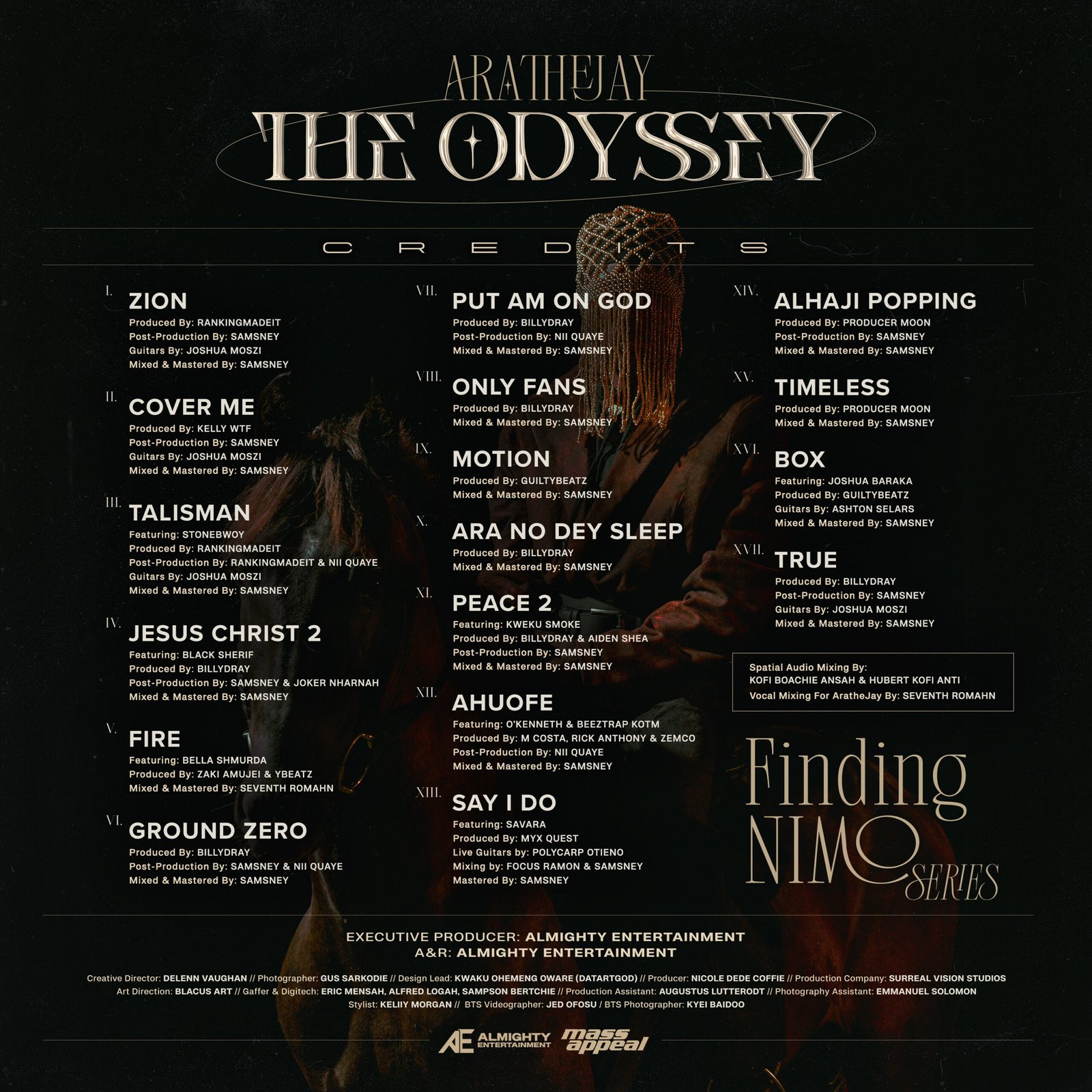
An extension of the team saw the legal counsel provided by Kelvin Nana (Lawyer K), with social media managed by Ivy Mintah and PR point-of-contact handled by Jude Tackie. To scale this independent vision globally without losing ownership, Almighty Entertainment secured crucial strategic partnerships. They teamed up with The Orchard West Africa for airtight digital distribution across major markets. The team’s global alignment with Mass Appeal created a healthy synergy that elevated the project’s international posture while keeping the core identity of the rollout authentic and artist-driven. Ultimately, The Odyssey proves that independence is not a limitation but a superpower when backed by structure.
